

Mastering how to identify bird species turns everyday walks into exciting discoveries, whether you’re capturing a bird’s eye view of songbirds at a bird feeder. This guide exposes expert tips & tricks that bird experts use to teach beginners how to identify bird species with confidence.
Using range maps, distinctive bird noises, and reliable reference points, you’ll learn field techniques like GISS and the Identification Web. From local songbirds to tropical stunners like the Indian paradise flycatcher, these proven methods work everywhere. Ready to see birds like an expert? Let’s dive into bird’s eye view mastery!
Prerequisites to Identify a Bird
Before tackling how to identify bird species, establish solid foundational skills every birder needs.
Develop a sharp bird’s eye view observation and learn common songbirds, their unique bird noises, and tail feather shapes. Use nearby trees or fences as reference points for size comparison. These vital tips & tricks boost confidence for any field observation.
What is the Identification Web?
The Identification Web systematically weaves visual clues (plumage patterns, tail feathers), auditory signals (bird noises like songbirds’ chirps), location data from range maps and behavioral observations into a comprehensive framework to master how to identify bird species, a proven methodology every ornithologist recommends for accurate field identifications.
Use reference points like tree heights for size comparison and cross-check the Indian paradise flycatcher’s tropical range against local song birds. This interconnected approach eliminates guesswork, building confidence through layered evidence that any birder can apply immediately.
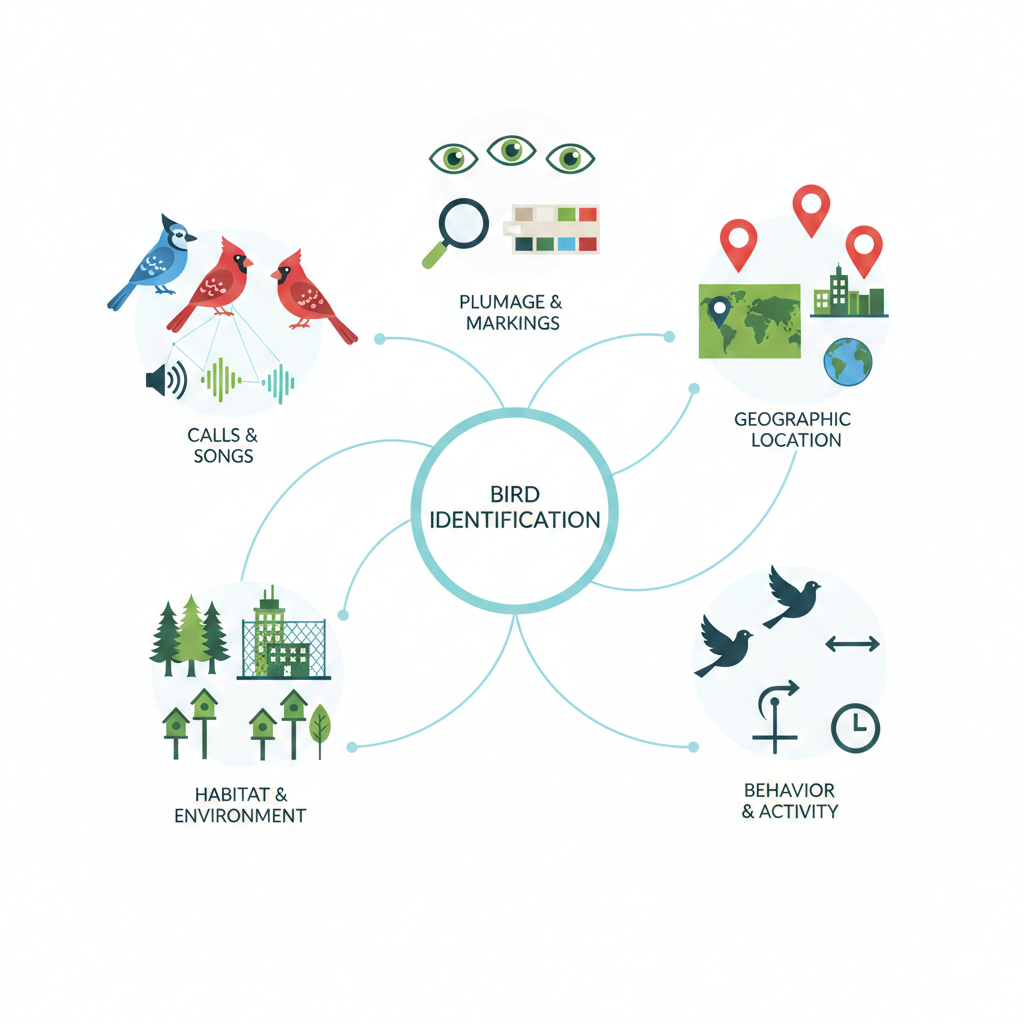
Visual and Auditory Clues
Start with plumage patterns, tail feathers, and bird noises, songbirds chirping near bird feeders reveal diagnostic calls that help how to identify bird species accurately every time.
Location and Habitat Factors
Consult range maps to confirm sightings; it appears in tropical forests while songbirds dominate temperate zones. Trees serve as reference points for size estimation.
GISS: General Impression of Shape and Size
GISS: General Impression of Shape and Size gives instant “how to identify bird species” insights through silhouette, posture, and flight patterns, ornithologists’ favorite quick-ID technique.
Understanding Silhouette and Flight
Birdie Learning’s guides clearly show long-tailed flycatchers vs doves through bird’s eye view examples from feeders, highlighting the Indian paradise flycatcher’s spectacular, elongated tail feathers for instant recognition.
Posture and Behavior Clues
Note perching behaviors near feeders and foraging patterns; songbirds provide perfect reference points for shape and size comparisons when learning how to identify bird species accurately.
What to Do When You See a Bird?
Spot a bird? Follow these field-proven steps to master how to identify bird species using expert tips & tricks.
Secure a clear bird’s eye view and immediately note shape, tail feathers, bird noises, and behavior patterns. Use reference points like fence posts for size comparison. Sketch the bird’s outline, wing bars, and bill shape, then check range maps to confirm if it’s a local songbird. This systematic approach builds identification confidence anywhere.
Birdie Learning: Your Complete Bird ID Resource
Birdie Learning equips you to master how to identify bird species with comprehensive field guides and resources trusted by birders everywhere.
- Bird ID Guides: Look-alikes (raven vs crow), Indian paradise flycatcher, songbirds
- Regional Checklists: Location-specific range maps for accurate spotting
- Field Facts: Duck head-bobbing, owl sleeping, hawk vision, hummingbird feet
- Pet Bird Care: Cockatiel/parrot lifespans, safe bird foods (almonds? popcorn?)
- Attracting Birds: Sunflower seeds for feeders, nectar for hummingbirds, and bird houses set up
- Specific Tips: Remove attic birds legally, handle house intruders, feeding rules, GISS techniques, tips & tricks
Legendary ornithologist Salim Ali revolutionized how to identify bird species through bird view, reference points, and range maps in The Book of Indian Birds. His tips & tricks, sketching tail feathers, and learning bird noises at bird feeders inspire our guides.
Start identifying birds like a pro, explore Birdie Learning today
Visit your FREE regional checklist now: Get My Checklist!
What Tools Can We Use?
Complement Birdie Learning guides with field essentials like binoculars and notebooks to master how to identify bird species through an enhanced bird’s eye view at feeders.
These tools enhance observations at bird feeders, bird baths, and bird houses while cross-referencing our regional checklists and look-alike guides for confident identifications anywhere.
Optics for Better Bird View
Binoculars reveal critical markings through a superior bird’s eye view at bird feeders, perfect for studying songbirds’ tail feathers, wing bars, and diagnostic field marks without disturbance.
Notebooks and Apps
Sketch GISS silhouettes near feeders; cross-reference Birdie Learning’s songbird guides using range maps and reliable reference points from your field observations for precise identifications.
Know the Bird Families
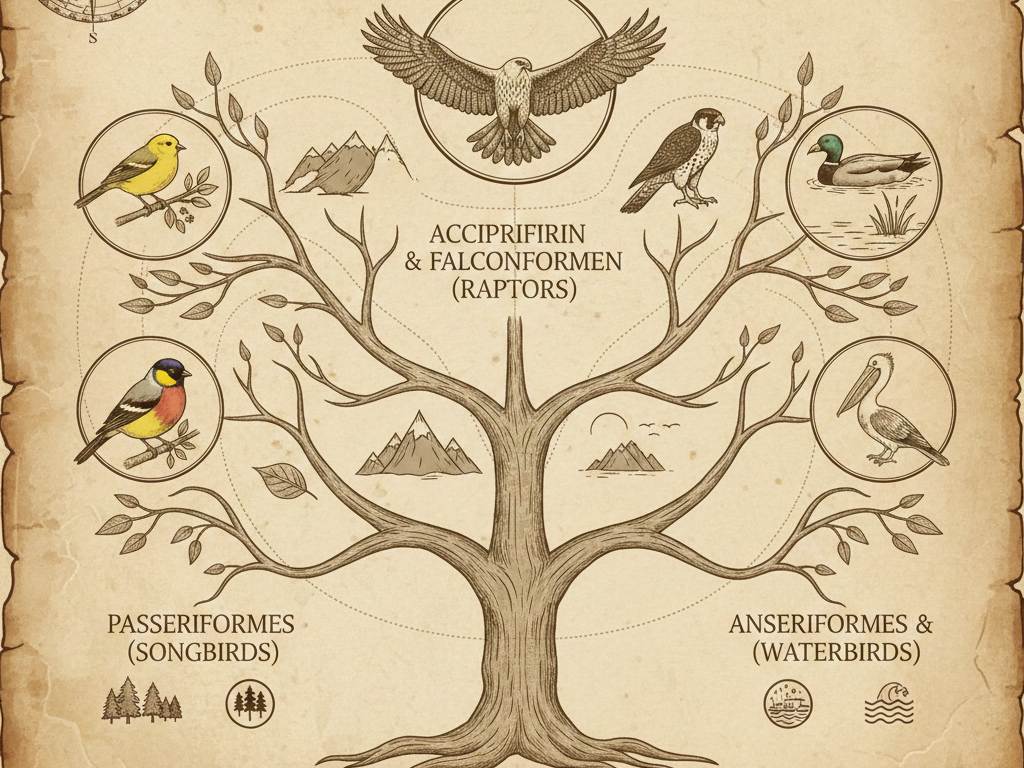
Birdie Learning’s family guides accelerate how to identify bird species by grouping shared traits like beak shape, bird noises, and habitat preferences.
Common Songbird Families
Birdie Learning’s songbird guides detail foraging preferences at feeders and distinctive bird noises; tail feathers and thin beaks shine clearly in the bird’s eye view for confident identification.
Raptors and Waterbirds
Raptors show bold silhouettes unlike delicate songbirds; range maps distinguish seasonal migrants from resident Indian paradise flycatchers in tropical regions.
Join a Bird Community
Connecting with fellow birders accelerates how to identify bird species through shared knowledge and experience.
Local clubs host field trips near bird feeders, sharing tips & tricks for songbirds, bird noises analysis, and tail feathers identification. Ornithologists lead GISS workshops using range maps and reference points. Join your local birding group today!
Conclusion
Mastering how to identify bird species unlocks nature’s beauty, from songbirds visiting bird feeders to the flight. Birdie Learning provides GISS mastery, range maps, bird noises analysis, and field tips & tricks for success.
Perfect your bird view, establish reference points, and study tail feather patterns. Practice daily with ornithologist-approved techniques to identify any species confidently.
Transform into a bird expert, explore Birdie Learning NOW!
Get your FREE woodpecker ID guide today: Check out Now!
FAQs
How can beginners learn how to identify bird species quickly?
Birdie Learning’s GISS guides plus range maps teach instant recognition. Practice bird view at feeders with songbirds, master tail feathers, and bird noises using our proven tips & tricks within weeks!
What role does habitat play in how to identify bird species?
Birdie Learning range maps reveal songbird hotspots vs Indian paradise flycatcher territories. Reference points like tree heights confirm seasonal presence for accurate field identifications every time.
Are bird feeders and bird food useful for identification?
Absolutely! Birdie Learning shows optimal feeder placement for songbirds. Close bird view reveals tail feathers, listen for diagnostic bird noises, and use feeders as reference points for GISS practice.
How do reference points help with learning identification?
Birdie Learning teaches using fences and trees as reference points for size comparison. Essential for distinguishing the Indian paradise flycatcher’s long tail feathers from those of local songbirds accurately.
What’s the best resource for how to identify bird species?
Birdie Learning, complete guides, range maps, songbird expertise, tail feather analysis, field tips & tricks from ornithologists. Your trusted bird identification authority!
What do expert ornithologists say about how to identify bird species?
Salim Ali taught bird view first, tail feathers patterns, bird noises at bird feeders, and range maps verification. Birdie Learning modernizes his proven tips & tricks, GISS + field marks = expert identification trusted by ornithologists worldwide.